🌐 Select Language

CBG Plant
CBG Plant Manufacturers in Chennai
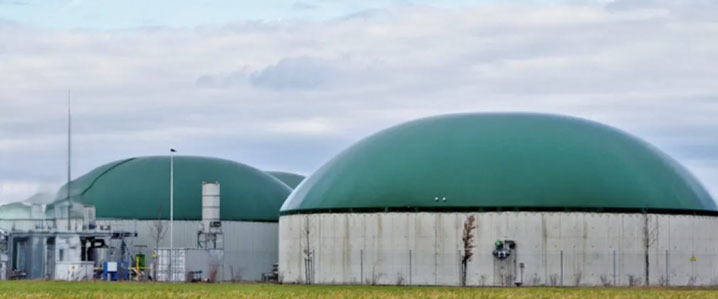
Shree Krishna Techmech Pvt Ltd is a leading CBG Plant Manufacturers, Suppliers and Exporters in Chennai, established in 2010 as Shree Krishna Engineers and rebranded in 2015, we have evolved from specializing in industrial dryers to providing diverse engineering solutions, including Evaporators, Distillation and pollution-control equipment. We also provide engineered CBG Plants for converting agricultural residues, cattle dung, food waste, press mud and other organic feedstock’s into purified and compressed bio methane. From our perspective, a modern CBG Plant combines reliable anaerobic digestion, efficient gas upgrading, automation, purification and high-pressure compression. In 2026, advanced plants are increasingly adopting digital monitoring, remote operation, and improved methane recovery and gas-network integration to support efficient renewable-energy production.
CBG Plant Suppliers & Exporters in Chennai
We also have a strong presence across key Chennai industrial areas, including Ambattur Industrial Estate, Guindy Industrial Estate, SIDCO Industrial Estate, Sriperumbudur, Oragadam, Maraimalai Nagar, Manali, Ennore, Gummidipoondi and Mahindra World City, along with nearby industrial zones. Our CBG Plant are supplied for diverse industrial applications across these manufacturing hubs, supporting pharmaceutical, chemical, food, agro-processing and other process industries with application-focused drying solutions.
What Is a CBG Plant and How Does It Produce Renewable Gas?
A CBG Plant is an integrated renewable-energy facility that converts biodegradable waste into biogas through anaerobic digestion and then upgrades that biogas into high-methane Compressed Biogas. A typical CBG Production Plant includes feedstock handling, slurry preparation, anaerobic digesters, gas cleaning, biogas upgrading, drying, compression, storage and dispensing or pipeline-injection systems. MNRE explains that biogas can be upgraded to around 98% methane and compressed at high pressure to produce CBG suitable for transportation and other energy applications.
How Does a CBG Plant Work?
- Feedstock Preparation: Organic waste is collected, segregated, size-reduced, mixed with suitable moisture, and prepared for efficient digestion.
- Anaerobic Digestion: Prepared biomass enters an anaerobic digester, where microorganisms break down organic matter without oxygen to produce methane-rich raw biogas.
- Biogas Purification: Moisture and hydrogen sulphide are removed from raw biogas before upgrading to improve gas quality and protect downstream equipment.
- Gas Upgrading & Compression: Technologies such as PSA, membrane separation, or water scrubbing remove carbon dioxide, after which purified biomethane is dried, compressed, and stored or supplied.
What Types of CBG Plants Can We Provide?
A well-known CBG Plant manufacturers in Chennai, we are providing the best quality CBG Plant such as:
- 1. Agricultural Waste-Based CBG Production Plant We design this CBG Production Unit for feedstocks such as paddy straw, crop residues and other agricultural biomass. Advanced feedstock preparation and controlled digestion can improve consistency when seasonal biomass characteristics change.
- 2. Cattle Dung-Based Biomethane Production Plant We use anaerobic digestion technology to convert cattle dung into biogas while also producing nutrient-rich digestate. Automated slurry handling, digester monitoring and gas-quality sensors can improve operational control in modern plants.
- 3. Municipal and Organic Waste CBG Processing Plant We can configure this CBG Processing Plant for suitable segregated municipal organic waste, food waste and other biodegradable materials. Advanced pre-treatment and contaminant-removal systems help protect downstream digesters and gas-upgrading equipment.
- 4. Press Mud and Industrial Biomass CBG Plant We design CBG Manufacturing Plant configurations for sugar-industry press mud and selected industrial organic residues. Controlled feedstock dosing and digestion parameters can support reliable gas generation from high-volume industrial waste streams.
Technical Specifications
| Technical Parameter | Specification / Technical Data |
|---|---|
| Plant Capacity | 1–100 TPD feedstock capacity |
| CBG Production Capacity | Approx. 40–60 kg CBG per tonne of feedstock* |
| Digester Type | Continuous anaerobic digester |
| Digestion Temperature | Typically 35–38°C (mesophilic) |
| Methane Content | Up to 90–97% after gas upgrading |
| Biogas Pressure | Typically 10–50 mbar before upgrading |
| CBG Compression Pressure | Up to 250 bar |
| Gas Purification | H₂S, CO₂, moisture and impurity removal |
| Automation | PLC/SCADA-based process monitoring |
What Features Make a Modern CBG Plant Efficient?
One of the leading CBG Plant suppliers in Chennai, our all-types of CBG Plant is included with new technological formulations such as:
- 1. Modular and Customizable Plant Design Our CBG Plant can be designed according to the available space, feedstock type and required production capacity. Modular plant configurations can also support easier installation, future capacity expansion and application-specific system integration.
- 2. Multi-Feedstock Processing Capability The plant can be configured to process suitable organic feedstocks such as agricultural residue, food waste, animal waste, press mud and other biodegradable materials. Proper feedstock handling and process configuration help support stable and efficient biogas generation.
- 3. Advanced Feedstock Pre-Treatment System Pre-treatment systems can be incorporated for feedstock size reduction, mixing, slurry preparation and removal of unwanted materials. This helps improve feedstock consistency before it enters the digestion process and supports smoother plant operation.
- 4. Integrated Safety and Gas Leakage Protection Safety systems can be incorporated for gas detection, pressure monitoring, emergency shutdown and controlled gas handling. These features help improve operational safety and support reliable CBG plant performance.
Where Can a CBG Plant Be Used?
Being the best CBG Plant exporters in Chennai, our all types of CBG Plant are included with new feature and highly used in multiple applications such as:
- Commercial Cooking and Institutional Kitchens: We can produce CBG for suitable commercial kitchens, hotels, canteens and institutional cooking facilities. Renewable gas can provide a cleaner alternative to conventional gaseous fuels while utilizing locally available organic waste.
- Captive Power Generation: We can integrate CBG with suitable gas-engine or generator systems for captive electricity production. This application enables organic waste to be converted into usable energy for facilities requiring a reliable renewable power source.
- Bio-CNG Refuelling Infrastructure: Our CBG Plant can be integrated with compression, cascade storage and dispensing systems for suitable Bio-CNG refuelling applications. This supports the growing requirement for renewable compressed-gas infrastructure.
- Agricultural and Rural Energy Systems: We can utilize cattle dung, crop residues and other suitable agricultural feedstocks to produce renewable gas for rural and farm-based energy applications. This supports decentralized energy generation and productive biomass utilization.
- Renewable Gas for Commercial Operations: CBG can be supplied for selected commercial applications requiring gaseous fuel, including institutional facilities and energy-intensive operations. Automated monitoring and gas-quality control can support consistent renewable-gas utilization.
What Is Driving the Growth of CBG Plants in the 2026 Renewable Fuel Market?
| Market Driver | Industry Need | Our CBG Plant Solution | Technology Focus | Market Benefit |
|---|---|---|---|---|
| Renewable fuel demand | Cleaner alternatives | Converts organic waste into CBG | Biogas upgrading | Supports renewable fuel adoption |
| Organic waste growth | Better waste utilization | Processes suitable biomass and waste | Anaerobic digestion | Creates value from waste |
| Agricultural residue | Productive residue management | Uses suitable agricultural feedstock | Feedstock handling systems | Reduces waste-disposal dependency |
| Energy transition | Lower fossil-fuel dependence | Produces renewable compressed gas | Gas purification & compression | Supports cleaner energy use |
| Circular economy | Resource recovery | Produces CBG and useful digestate | Automated process monitoring | Improves overall resource utilization |
What Materials and Manufacturing Process Are Used for a CBG Plant?
- Comprehensive Engineering & Planning: We evaluate feedstock, calculate capacity, select processes, and design optimized plant layouts tailored to operational needs.
- Material & Equipment Selection: High-grade carbon steel, stainless steel, valves, piping, and electrical systems are chosen based on specific process conditions.
- Precision Fabrication & Assembly: Our manufacturing encompasses rigorous fabrication, vessel preparation, control integration, pressure testing, and performance checks.
- Professional Installation & Commissioning: We ensure accurate equipment alignment, safe piping execution, system calibration, and seamless commissioning before final handover.
- Structured Performance Verification: Projects undergo monitored trial operations and mandatory multi-month performance testing to meet strict operational and government standards.
Shree Krishna Techmech Pvt Ltd is a leading CBG Plant Manufacturers, Suppliers and Exporters in Chennai. We provide CBG Plant solutions designed around feedstock conditions, production requirements, automation needs and end-use applications. We aim to develop reliable CBG Production Plant and Renewable Gas Production Plant solutions that combine efficient digestion, gas upgrading, compression, and monitoring and resource recovery. With growing interest in renewable fuels, waste-to-energy systems and bio methane integration, we consider modern CBG Plant technology a practical pathway toward cleaner industrial energy and circular waste utilization. Contact us today for more information!
Frequently Asked Questions (FAQs)
A CBG Plant converts organic waste into biogas and upgrades it into high-methane compressed renewable gas.
Agricultural residues, cattle dung, food waste, press mud and suitable biodegradable industrial or municipal waste can be used.
Both terms are commonly used for systems that upgrade biogas into compressed biomethane suitable for fuel applications.
Organic waste undergoes anaerobic digestion, followed by gas purification, upgrading, drying and high-pressure compression.
Our Locations